Marc-Élie Adaime

Postdoctoral Research Fellow · Smithsonian Institution

Reconstructing evolutionary histories and biodiversity from complex and incomplete biological data

Can we uncover the history and diversity of life from incomplete, noisy, or traditionally underused biological evidence? I develop and apply quantitative approaches, including phylogenetic methods and image processing techniques, to study the evolution of plant lineages and the response of ecosystems to environmental change. My research examines biodiversity across polar and tropical ecosystems, using evidence ranging from molecular sequences to fine-scale phenotypic variation in living and extinct organisms, and from biological communities preserved in sediments to present-day species distributions. It involves fieldwork, laboratory analysis, and computational modeling.

Smithsonian Institution · Washington, D.C.


About

My research combines phylogenetics, image analysis, evolutionary theory, and paleoecology. I study how the diversity of key plant lineages changes through time, how their traits evolve, and which environmental factors drive major shifts in that diversity. To do so, I work with (often) incomplete biological evidence found in molecular sequences, subtle phenotypic variation in living and fossil organisms, and the complex morphologies of their structures.

I trained first in Quaternary paleoecology in Québec, where I studied the postglacial history of the Fury and Hecla Strait region, a key area in the Arctic where Atlantic and Pacific waters reconnected after deglaciation. I collected sediment cores from two lakes on the Melville Peninsula, south of northwestern Baffin Island, and analyzed diatom assemblages and geochemical proxies to reconstruct how landscapes and environments changed since the last ice age. These records provided the first chronology of glacial retreat in the region. During my doctoral work at the University of Illinois Urbana-Champaign, I developed phylogeny-aware neural networks that extract evolutionarily and ecologically meaningful signal from pollen morphology, in lineages with visually indistinguishable pollen. This enabled the placement of unknown specimens within reference phylogenetic trees, the identification of extinct lineages, and the detection of adaptations to environmental stress that arose over evolutionary time. Currently, at the Smithsonian, I combine forest-plot data with machine learning models that automate the extraction of anatomical traits and genomic properties, working to understand why certain plant lineages succeed in some regions but not others, and how their traits shape their ability to establish in particular climates.

Lake sediment core from Lac Mégantic
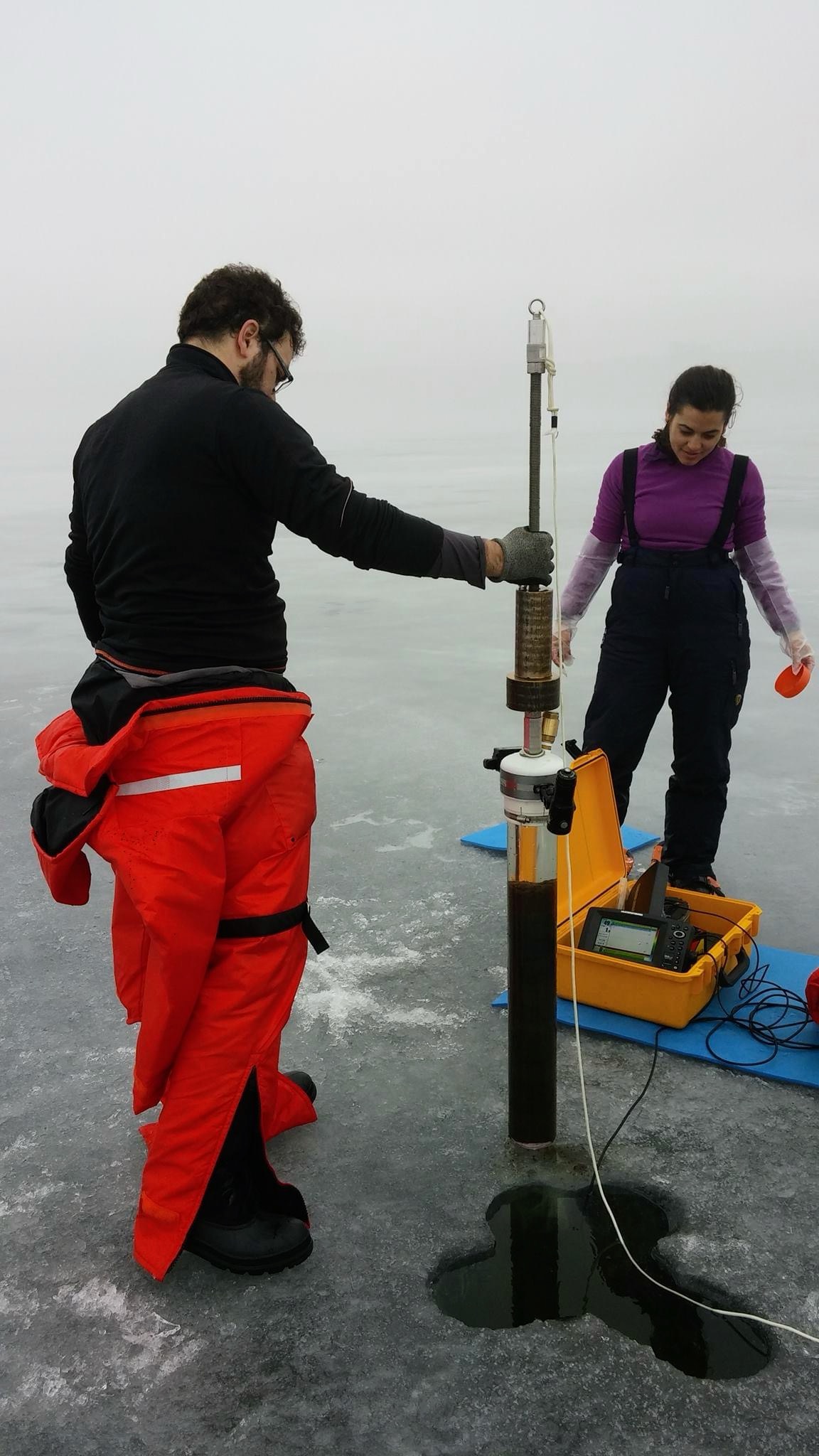
Coring on a foggy day in the middle of a frozen Lac Mégantic. These sediment archives preserve biological traces of past life, from environmental DNA (eDNA) to remains of plants, animals, diatoms, and cyanobacteria. They offer an exceptional natural laboratory for testing ecological and evolutionary hypotheses, from population change through time to shifts in biodiversity, and for comparing observed long-term biological change with predictions from computational models. Lac Mégantic, Québec · February 2016
Method linking DNA sequence data, superresolution pollen imaging, and neural networks to place species in a time-calibrated Podocarpus phylogeny
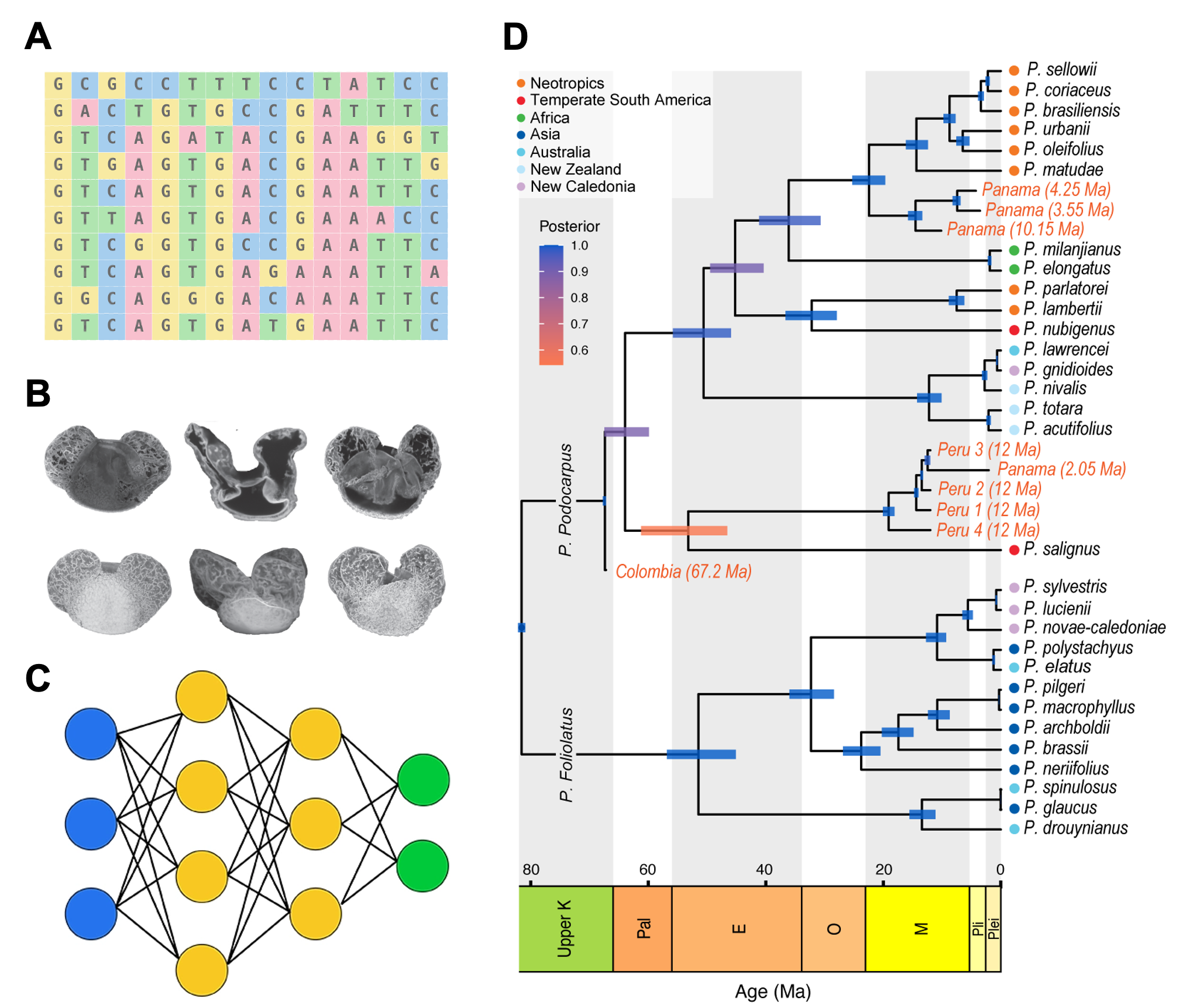
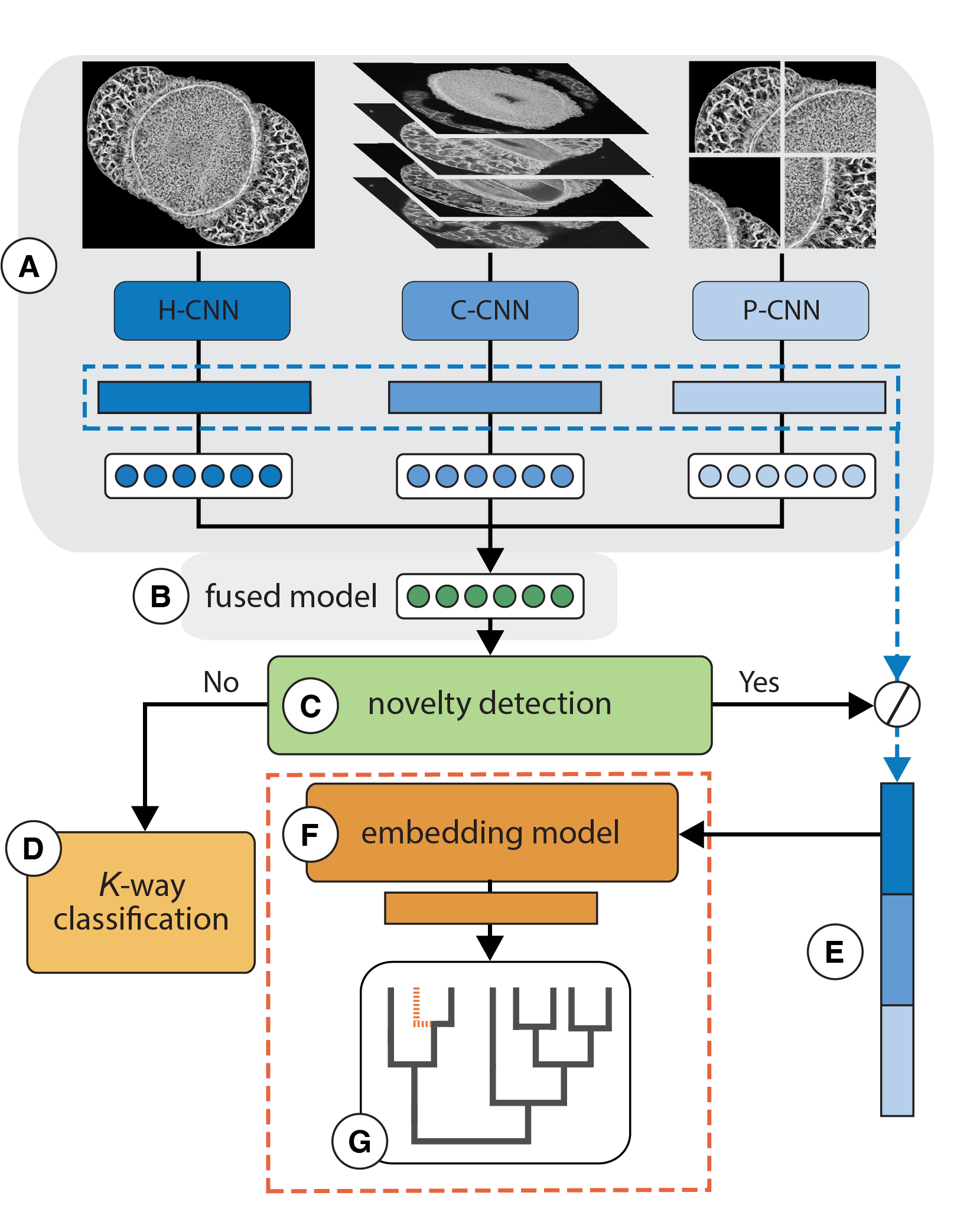
A method we developed to place unknown species in a molecular phylogeny from morphology alone. The reference phylogeny we use is inferred from DNA sequence alignments (A); superresolution microscopy captures the shape, texture, and internal structure of pollen grains (B); and neural networks (C), guided by phylogenetic distances, learn representations of that morphology to place unknown, potentially extinct species within the reference phylogeny (D). The approach generalizes to other organisms with evolutionarily meaningful morphology.

Current research

Research questions

A few questions that drive my current work: how can we trace the way lineages evolve and adapt over time when phenotypic variation is almost impossible to detect by eye, and how can we quantify shifts in the diversity of ecological communities when species are difficult to tell apart, together with the computational approaches that make it possible to answer both questions.

Time-calibrated phylogeny of Podocarpus EVOLUTIONARY CHANGE

Evolution and adaptation across deep time

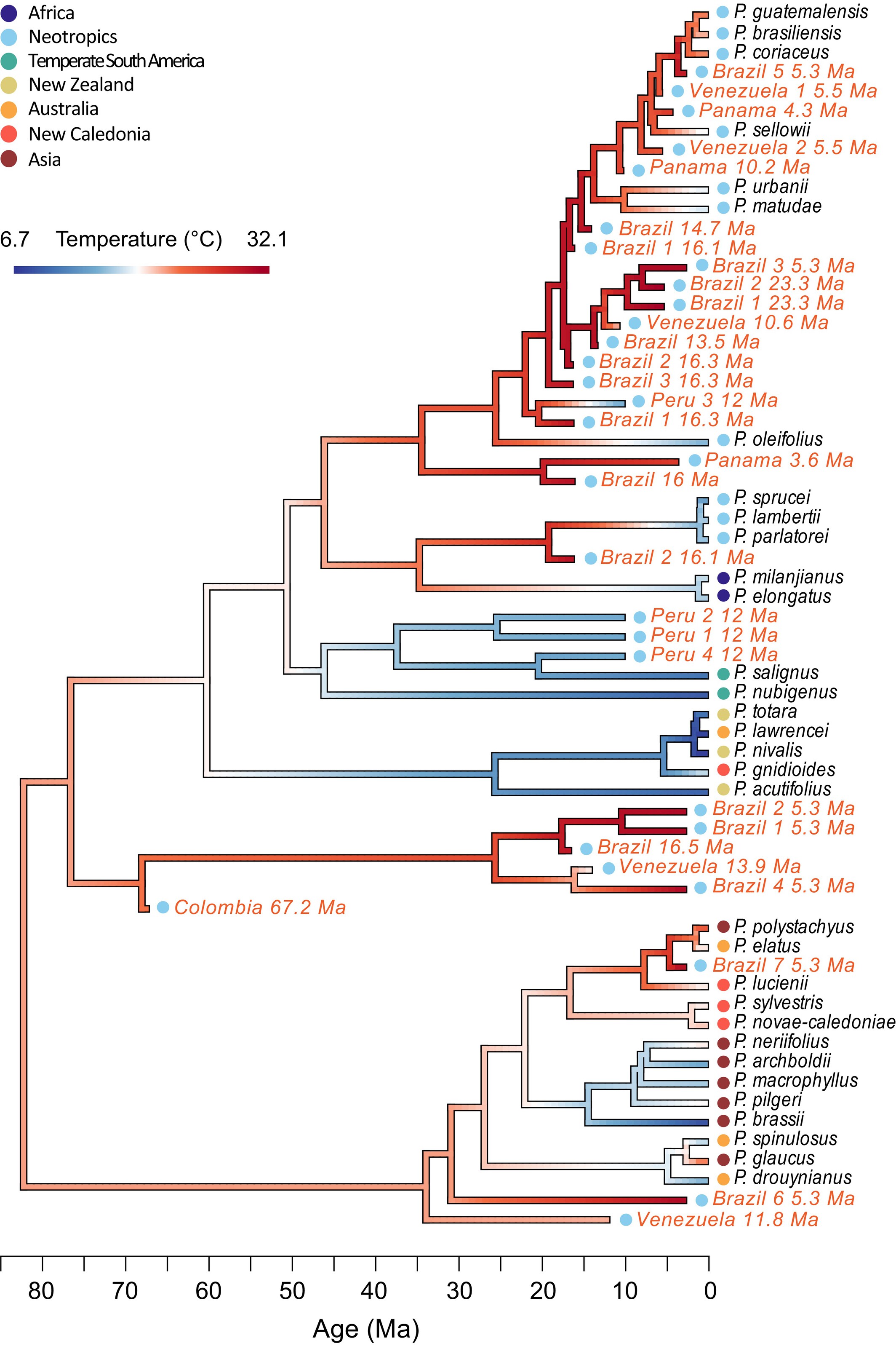
Why do lineages evolve particular traits, and how do those traits change as environments shift? One example comes from our work on Podocarpus. In a recent study, we used fossil pollen to help reconstruct how the climatic preferences of this lineage changed through time. We first placed extinct pollen types within a reference molecular phylogeny of Podocarpus (see Leslie et al., 2018 and Khan et al., 2023), built from chloroplast and nuclear DNA, using a method we developed to infer evolutionary relationships from morphology. We then estimated the temperatures in which these extinct plants lived and used that information to improve reconstructions of ancestral climate tolerance. This is important because ancestral states, whether they involve traits or sequences, can be highly uncertain when they are inferred only from living species. Fossils provide additional information from the past that can help constrain those reconstructions. In our case, the results suggest that early Podocarpus lineages were adapted to warm climates, while tolerance of cooler conditions evolved independently several times. More broadly, this work shows how fossils can help clarify when lineages entered new environments and how their traits changed as climates shifted. I also study trait evolution through other characters, including cone anatomy, to explore how adaptation, inherited constraints, lineage history, and chance shape the trajectories evolution can take.
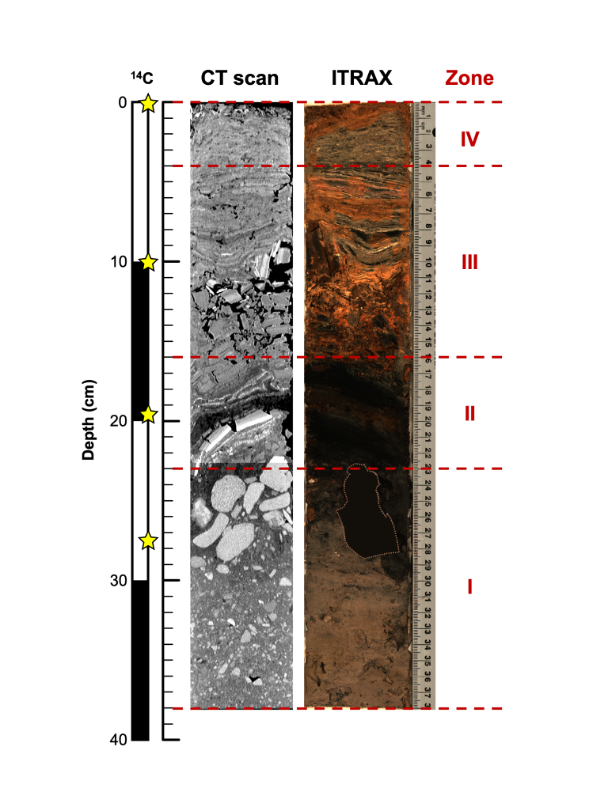
Ward Hunt Lake sediment core ECOLOGICAL CHANGE

Ecosystems and environmental change

How do ecosystems reorganize as their environment changes? I have explored this question across very different systems, from polar environments to tropical ecosystems, where similar ecological responses can be studied with very different records. One example comes from ongoing work at Ward Hunt Lake, North America's northernmost lake. Its sediments record a long transition from glacial and anoxic conditions to a more oxygenated and biologically productive lake, including the appearance of persistent cyanobacterial mats and, later, increasingly diverse diatom assemblages. These biological changes help us understand how even extremely cold and ice-covered ecosystems respond to shifts in light, oxygen, ice cover, and climate over thousands of years. This work is part of a broader set of projects in which I combine traditional taxonomic identification of microorganisms and plant remains with environmental DNA (eDNA), and other biological and environmental records to reconstruct past communities and track ecological change through time. I remain involved in studies across sites in the Arctic and tropics that preserve remarkable evidence of how biodiversity varies across space and changes over time.

Pollen imaging and analysis METHODS

New methods for open challenges in ecology & evolution

Many questions in ecology and evolution are limited by variation that is too subtle to recognize reliably with traditional methods. One example is a deep learning pipeline we developed to connect complex pollen morphology with molecular phylogenies. The models learn fine differences in shape, internal structure, and texture from superresolution images, then use those differences in their evolutionary context to identify unknown taxa and estimate where they belong in a reference phylogeny. More broadly, I develop methods for measuring biodiversity when species cannot be identified easily or when important phenotypic differences are almost invisible. The same problem appears at very different timescales, whether it involves tracking ecological change over decades or detecting rapid, cryptic diversification of lineages over millions of years. I am also interested in methods that better connect phenotypic and molecular data, improve phylogenetic estimation, quantify how uncertain inferred evolutionary relationships are, and reconstruct ancestral traits and sequences from incomplete data. This work naturally brings together biology, computer science, and mathematics to develop new algorithms and models for questions that existing methods cannot resolve.

Approach

From field data collection to modeling complex biological systems

My work runs from collecting data in the field to analyzing complex biological data, both morphological and molecular, using established techniques alongside the new statistical and computational methods we develop.

Beginning January 2027, I join the American University of Beirut (AUB) as Assistant Professor of Bioinformatics and Computational Biology, extending this program to the biodiversity of Lebanon and the eastern Mediterranean. My research at AUB will also include developing statistical and computational approaches for phylogenetic inference, trait and sequence analysis, and biodiversity quantification. I will maintain ongoing collaborations with colleagues at the Smithsonian, UIUC, and Université Laval's Centre d'études nordiques, alongside other partners, through research projects and fieldwork.

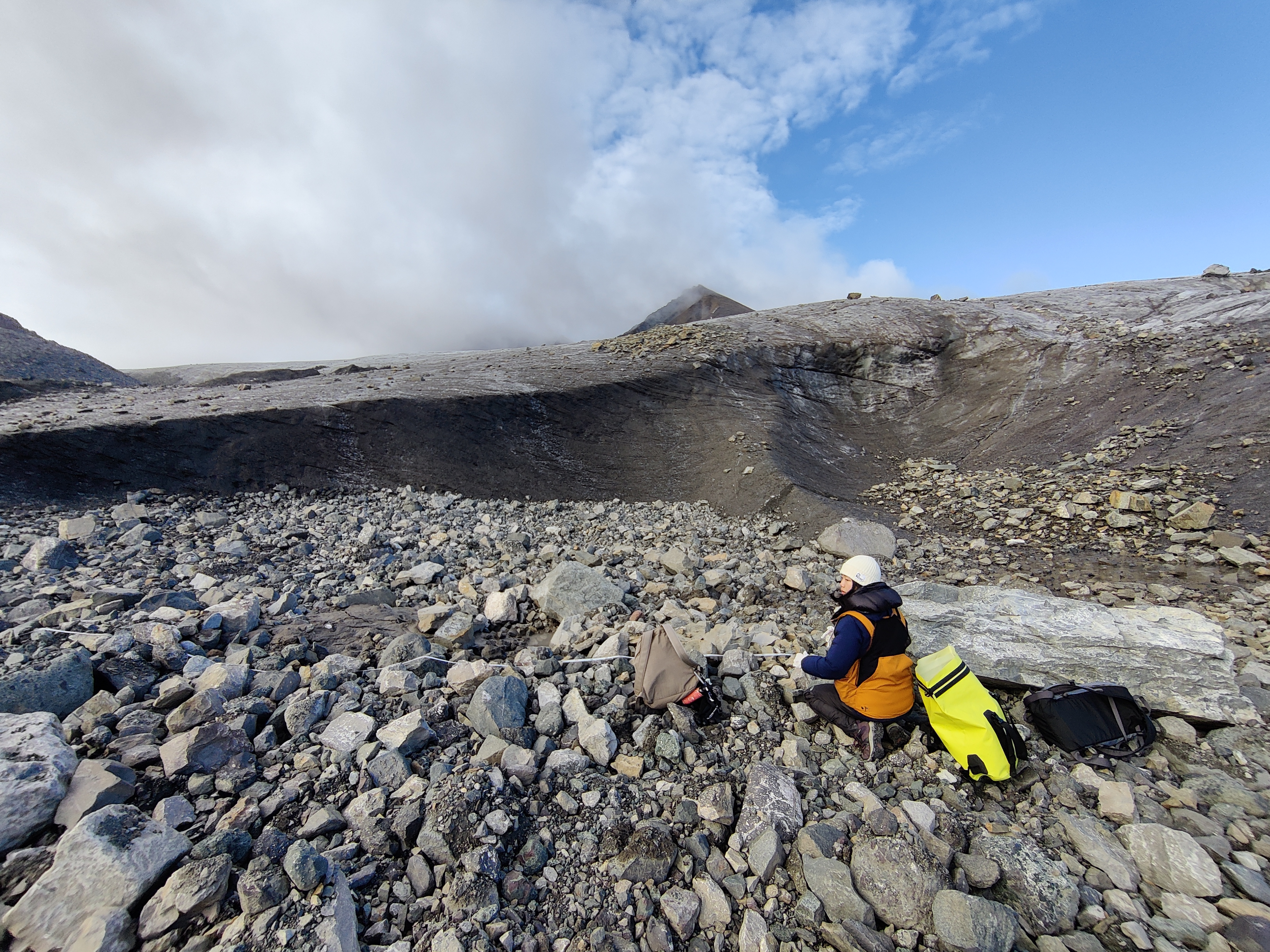
Field sampling in the Canadian High Arctic
Field sampling in northwestern Ellesmere Island (Nunavut), Canadian High Arctic · July 2022